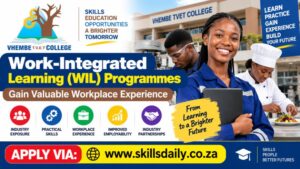
For students and graduates looking to bridge the gap between classroom learning and the world of work, Vhembe TVET College provides Work-Integrated Learning (WIL) and placement opportunities designed to give learners practical workplace exposure.
TVET College describes WIL as a purposefully designed learning programme that integrates theoretical knowledge with authentic or practical work. The college’s placement programme aims to help students obtain relevant workplace experience connected to their field of study while confirming their competence and improving employability.
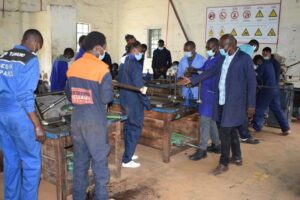

What Is Work-Integrated Learning?
Work-Integrated Learning is designed to give students an opportunity to take the knowledge they have gained through their studies and apply it in a real workplace environment.
For TVET students, this can be particularly important because technical and vocational qualifications require learners to develop both theoretical understanding and practical competence.
According to TVET College, the purpose of its WIL placement is to provide relevant working experience in a suitable workplace related to the student’s course of study, as required by the Department of Higher Education and Training (DHET)
Types of Placements at TVET College
The college identifies different types of workplace placement opportunities.
1. Workplace-Based Exposure
Vhembe TVET College lists Workplace-Based Exposure (WBE) as one of its placement types.
This allows students to be exposed to the world of work for a shorter period. The college indicates that these placements can be ongoing and may last approximately 5 to 10 days.
Although short, this type of exposure can help students become familiar with workplace environments and understand how organisations operate.
2. Internships
The college also provides for internship placements lasting between 18 months and two years, depending on the programme.
Vhembe explains that internships give students an opportunity to develop occupational competence in the workplace. The college further states that, upon completion of the relevant requirements, students may be able to apply for a National Diploma through DHET.
Why Work Experience Matters
Having a qualification is an important achievement, but employers often also look for candidates who understand how to operate in a professional environment.
WIL can help learners develop practical abilities while becoming familiar with:
- Workplace procedures
- Professional communication
- Workplace culture
- Ethics and conduct
- Teamwork
- Industry technology
- Problem-solving
- Occupational responsibilities
- Employer expectations
TVET College highlights exposure to up-to-date systems, practices, technology and a wider range of real work as one of the benefits of WIL for students.
How to apply